
Home / The Book / Behind the book
Behind the book
Kettle Bay is invented. The resorts it is built from, the ice road and the lantern rule are not.
Annika’s map of Kettle Bay Resort, as it was in December 1986. A two-color version is printed on the endpapers.
The map of Kettle Bay
Annika drew this before she wrote a word of Part Two, so she would always know how long it took to walk from Cabin 9 to the dock in the dark. (Four minutes, if the path is shoveled.)
1–11
Cabins, by the resort’s own numbers
L
Lodge, office and the Aas kitchen
D
- -
Dock and the lantern post
Ice road to the Narrows, 2.4 mi
F
N
Fish-cleaning house
North; scale ½ mile
What the ice will hold
Chapter Four is named for an ice measurement, and the whole plot turns on one inch. These are the Minnesota DNR’s general guidelines for new, clear ice. White or snow ice is only about half as strong, and no ice is ever guaranteed safe.
Check current conditions with local bait shops and resorts before you go out. Ice thickness varies across a single lake.
| Stay off | Under 4 in |
| Ice fishing or other activities on foot | 4 in |
| Snowmobile or ATV | 5 to 7 in |
| Car or small pickup | 8 to 12 in |
| Medium truck | 12 to 15 in |
Where it came from
Photographs from the winters Annika spent driving north to research the book.
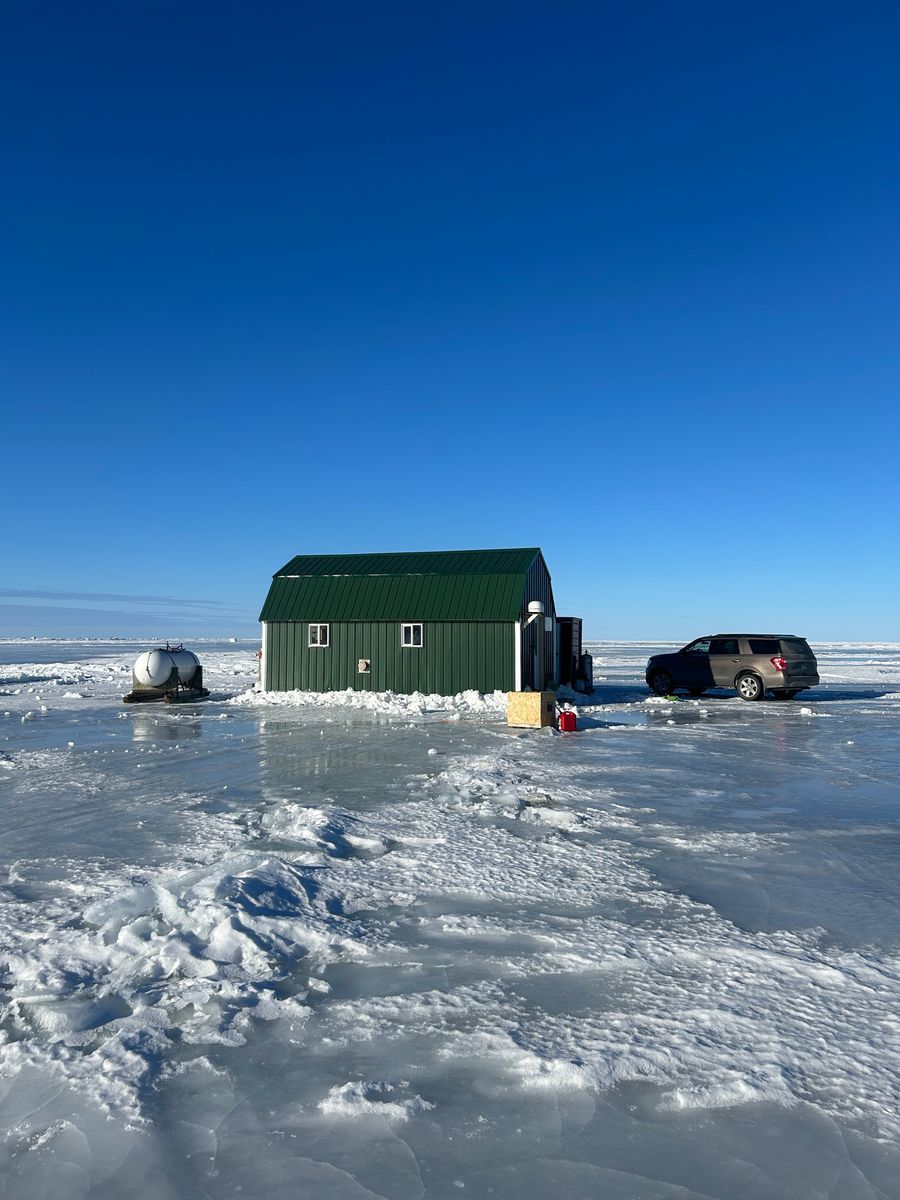
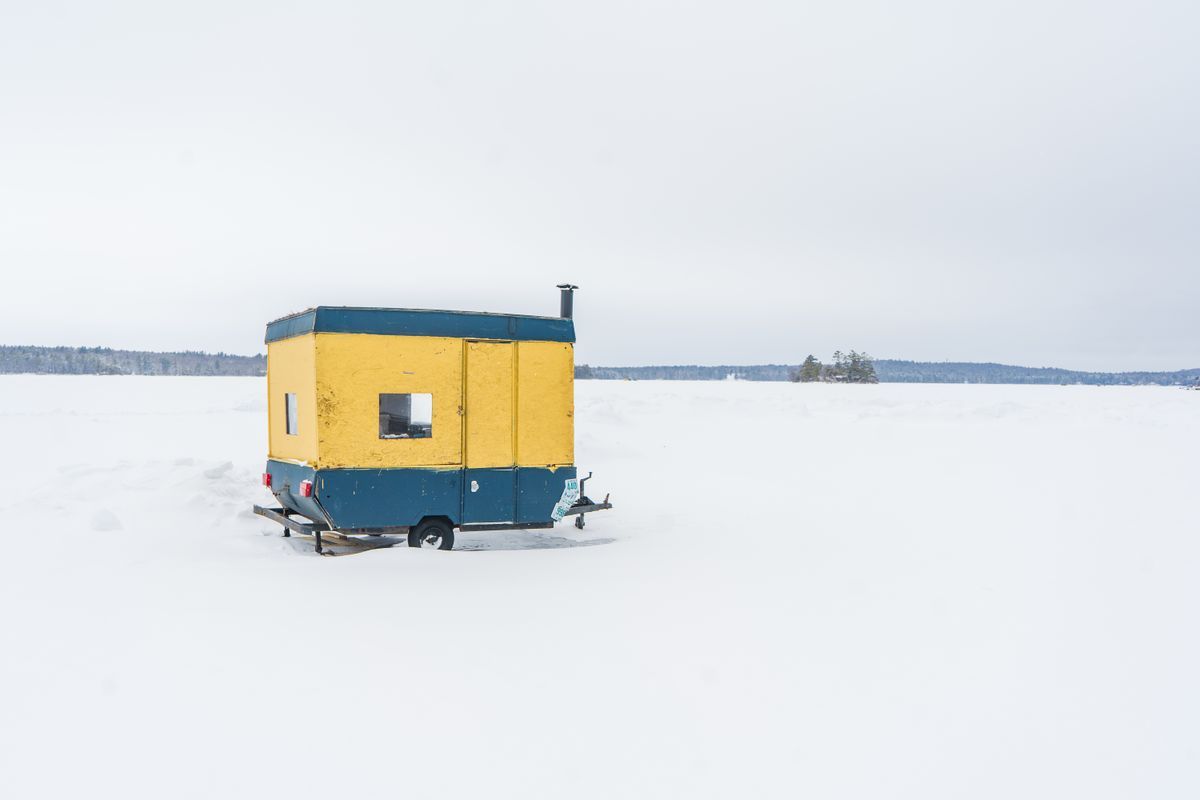
The fish houses Henrik pulls onto the ice in Chapter Five look like these: plywood, a stovepipe, a number painted on the door.
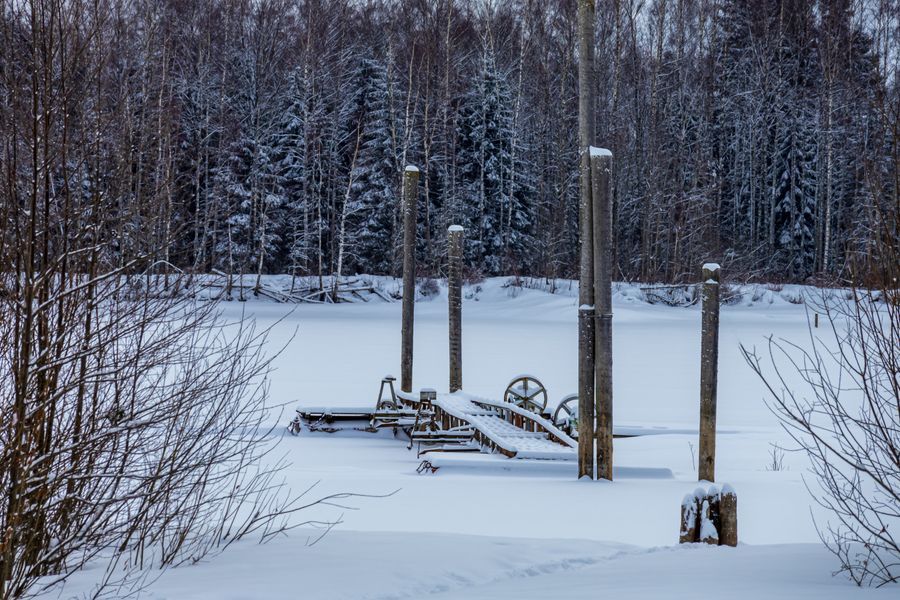
The resort docks stay in all winter. The last post is where the lantern sits.
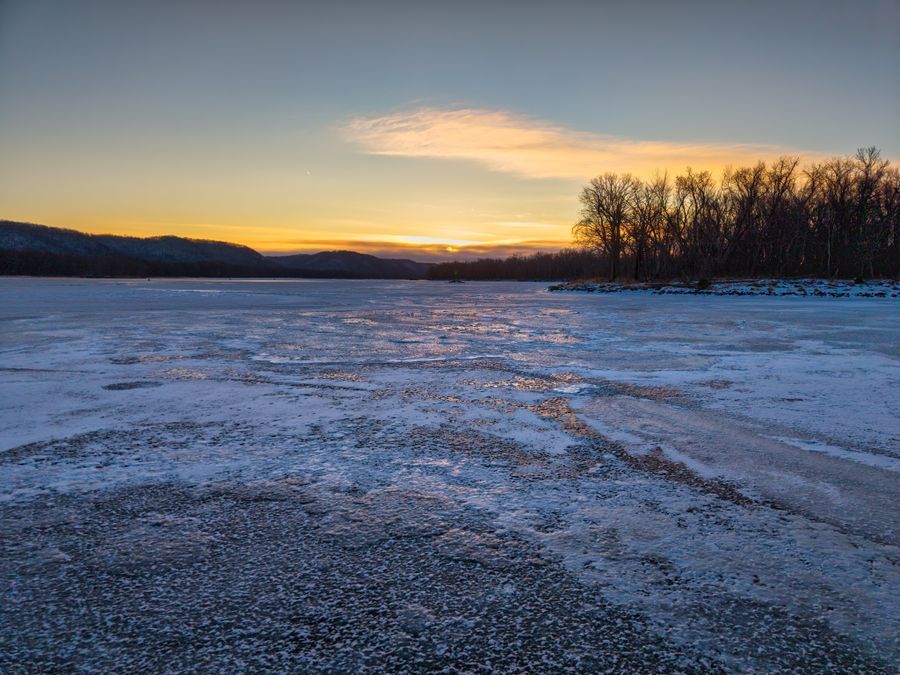
Rotten ice in March turns gray and then black. Resort families call it candled ice.
Research and thanks
Oral histories from three families who ran resorts in Cass County between 1950 and 1990, recorded by Annika in 2016 and 2017
Her grandmother’s resort ledgers, 1962 to 1979
Minnesota DNR ice safety guidance and lake survey maps
Two winters of fish-house rentals, one of which went better than the other